Women in Music Artist to Artist: Simone Denny & LU KALA
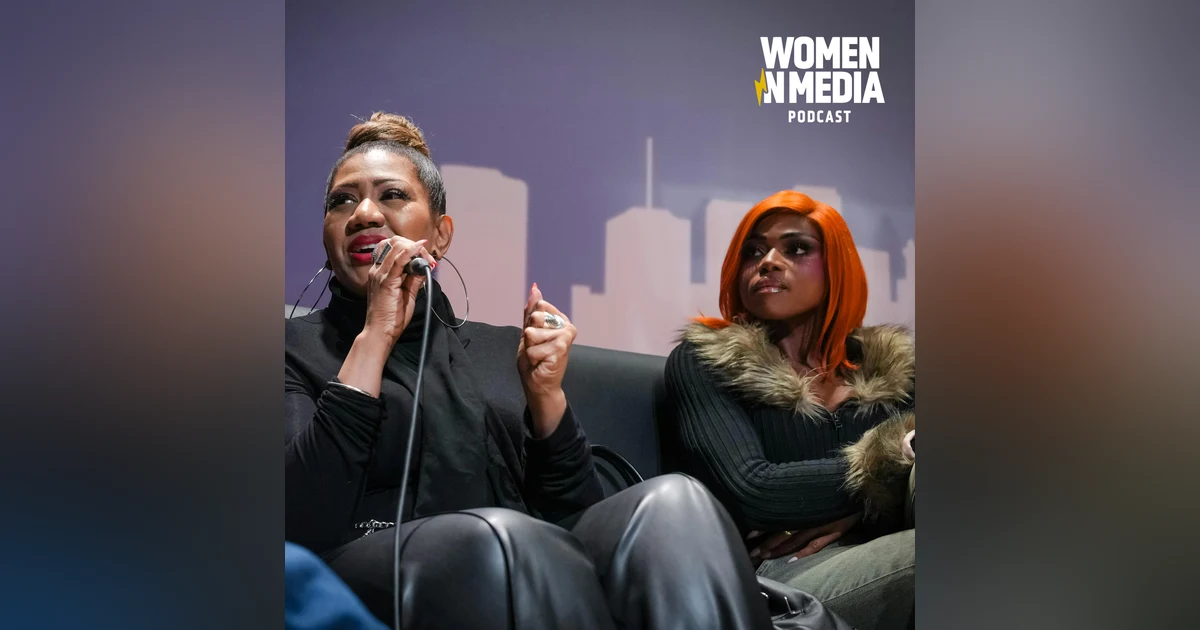
Host Sarah Burke moderates an Artist to Artist discussion between Simone Denny and LU KALA at the 2026 Women in Music Summit


Recorded live at the Women in Music Canada Summit, this artist-to-artist conversation brings together two generations of trailblazers in pop and dance music. Host Sarah Burke moderates this discussion between Simone Denny —Canadian dance and house icon, 7x Juno nominee, 4x Juno winner, and Women in Music Career Achievement Award recipient—and LU KALA, Juno-nominated pop powerhouse behind the viral anthem “Pretty Girl Era” and a Billboard Rising Star honouree.
Together, they unpack what empowerment really feels like, how family, culture, and growing up in Toronto shaped their sound, and what it means to be Black women working in genres where they’re still treated as exceptions. They talk candidly about body criticism, confidence, and turning online comments into affirmations and anthems.
They also discuss the invisible labor of social media and always being “the brand." Along the way, they reflect on mentorship, the people who speak your name in rooms you’re not in, the reality of non-stop hustle in today’s music industry, and how they each define success and legacy on their own terms.
https://www.womeninmedia.network/
I'm Sarah Burke, and this is the women in media podcast. The conversation you're about to hear was recorded last month with a live audience at the fourth annual Women in Music Canada Summit. I was honored to moderate this artist to artist session featuring Simone Denny, aka the face of love, Inc, who is being recognized as a 2026, Career Achievement Award recipient at the honors this year, and LU KALA, and I'm certain you've had her song pretty girl era stuck in your head at some point. Now, what was wonderful about this conversation is that although these women come from completely different eras in music, they've got more in common than you might think. Please enjoy this conversation recorded live on stage at the 2026 women in music Canada Summit. Maybe we've met, maybe we haven't. My name is Sarah Burke, and I have a long history in the Canadian music scene, working in radio for 20 years, terrestrial and Sirius XM. So if we've crossed paths before, amazing. I'm on a new venture now. I have a podcasting network which specializes in women first content. So you can check that out as well. It's called women in media network. Women in Music is a great alignment for what I do, especially given my history. So first up, we've got Canadian music icon. She's an OG voice in the dance and house music scene here in Canada, seven time Juno nominee, four time Juno Award winner. You know her voice from love Inc, BKs wildlife, and she's celebrating all sorts of accolades right now, black actors guild Lifetime Achievement Award, and with women in music this week, a Career Achievement Award. Simone Denny get up here.
Next up, we've got another Juno nominated artist. She's also a Toronto songwriting wizard in the pop music scene. You probably know the ear worm. She's responsible for pretty girl era. Hands up. She's been all over the Canadian radio pop charts, and she's also a billboard rising star honoree. So get up here, LU KALA. You going to try and leave a couple minutes at the end for some questions. And I know we have some people joining us online, so feel free to put your questions in the chat. So let's start with this. If your music were introduced as a headline, what do you think it would say
you're a superstar.
Too easy for some mom, right?
Lou, let's rebrand. I don't know you went from being pretty but now you're in your hottest era. Now you're hotter now,
yeah, you're hotter now.
Muse is out. You're hotter now.
I love that. So when you think about empowerment, you know, we're in Women's History Month, we're celebrating women in music week. What does it mean to you, like personally, not as a brand, but as a person, to be a woman and feel empowered?
It feels I think for me, it would be feeling good in my skin, being who I am, being my authentic self, and also helping others along the way to feel the same way.
I don't know, I feel like it feels like freedom. It just feels like just being comfortable in your own skin, in that you can make the rules. You don't have to follow the rules. And we've got a couple
generations on stage here. I feel like I'm kind of in the middle of you two. So we're going to talk about how that looks amongst the generations and everything, but Lou, I'm going to quote you here. You've said, The world owes me nothing, but I owe myself everything. So where does that mindset come from?
Where'd you guys find that quote?
I think it was, it was in a music article like and it was when you sent I'm pretty sure, yeah,
no, that's so funny. The world owes me nothing. I just feel like we're living a lot of times. I think people sometimes are entitled, or they just feel like everyone has to, like, care about you, or do all this stuff for you and this and that. And I think that you start breaking down more doors if you walk in realizing, like, hey, no one owes me anything, but like, I owe myself being the best version of myself, working the hardest I can, writing the best songs, being in the gym, whatever like, if I put pour into myself, then it can only happen for me. And the
way that we sort of interact with others when we feel our best, I think, brings everyone along for that ride. Right?
People respect you more. They want to be more around people that are pouring into their own cup. It's addictive, for sure,
and maybe this has something to do with upbringing, or maybe it's something you learned along the way outside of you know, family. But how has family and culture shaped your sound and your confidence? I want to hear about this from
both of you. Yes. Simone, well, I think both have gone hand in hand. I am Canadian born, Guyanese parents, and I bring a lot of my Caribbean heritage into my live performances. I'm very Kumbaya and very you know, everybody come in and enjoy the party of your. Hands are not up and you're not sweating by the end. It's kind of a carnival thing, and then I haven't done my job. So I think culture is played from both the Canadian side and the Caribbean side has played a lot in who I am, and I bring that to the music and to the stage presence, okay?
Lou, yeah, I think I was, I was born in Congo, raised in Toronto. I now live in LA so I do think that like growing up in like, this big family and listening my mom saying, always both my parents, technically, so like listening to, like the music there, and then getting on the school bus as a kid and hearing the music that was, like, playing on the radio, and in my neighborhood, all my friends are everything from, like, Jamaican to Romanian to Filipino. And like, I think, like, a big part of who I am is because of all the sounds I got to hear I was lucky enough to hear growing up. And then, you know, I try to, I choose to, like, use some of it in my music now, and you know, some of the next stuff coming up.
So, yeah, I'll add to that too. I think, as Lucas said, growing up in Toronto, you have so much culture coming at you. And I know, for me, it's from listening to chum radio to, you know, you're listening to rock, you're listening to everything is coming at you. And I think it's a very unique experience. And I think we're very lucky to be Canadian, especially Torontonian, because it's all coming at you.
You don't realize it until, like, you move away somewhere else, and you're like, oh, okay, I don't have no flavor. Like, you really realize it when you see the restaurants, yeah,
and you value Toronto so much more when you come back, you're like, Okay, we really have something special here that's amazing.
So women are often, you know, in the spotlight, and they're being completely judged based on how they look, who they associate with, all these things. You know, we're used to these conversations, but Lou, I know you've talked a lot about, like, body criticism over the years, and at what point does like someone judging you about something become fuel to your fire? And I want you to Simone. You can think of an instance where this has happened for you in the meantime too.
Yeah, I don't know. It's really weird being an artist, or being in any of these creative fields where like your face is kind of like you're on the line, yeah, yeah, you're on the line. Because I feel like everyone feels like they can say anything about you, like, I think they forget you're a human and that you might actually have some feelings. So you can literally post, like, I don't know, like, just walked my dog, and they're like, whoa, the body looks different. Whoa, this. And that you're like, bro, the post had nothing to do with that, yeah, you know. So luckily for me, I've always been very, very confident. So it really never did anything like for me, against me, like, I was like, All right, I'm glad that you feel this way. People are always going to have opinions, you know. But you can filter out like. You can kind of filter like, and just look at the things, the positive things, and like, you know, leave the negatives away. But again, I've always been very, like, confident, and I feel like I've spread that through my music.
I would argue, it literally made song titles for you.
Yeah, you know, I feel like I've always written songs that kind of are like mantras. I feel like people decide to like, pick up into like, their lives or their day, or like you walk into the air. Like, yes, I feel like I'm in my pretty girl era. Like, this is the year of the era, you know, so it's never done anything against me. But unfortunately, when you're in this world, people are always going to have an opinion, whether it is negative or positive. And now I look a little different than I did, you know, when I entered the game, but I'm still gonna hear the opinions. So you can't win. So screw them.
I would also argue generationally you can't really win. Like, there's more social media, more cameras on you now than when, when you, like, came into the music scene. And I don't know if that would be better or worse for this situation, but back in the day, like, what did you face coming into this? Well, I
still had pressure. My fans always loved me. They didn't care. I got pressure more from inside the group, from one particular member of the group, and it was used to try to diminish me. But the beautiful part is, I've always been confident. I was a much curvier girl there at that time, and I never felt less than and I think that's what my fans really picked up on is. And I when I sang the songs, I think they felt that. And I was like, I was encouraging you through superstar to be the superstar. It's not about what you look like, but about your weight. It's about you feeling good about being you. And that's it. And they picked up on that
totally Yes, round of applause for that.
That's what's really nice about having like fans or supporters or like people that care about your journey, because they really, genuinely don't care, and they can see themselves in you and in the lyrics that you write and this and that. So if you're not confident, I'll share my confidence with you. Don't through a song,
so love that now, like building your career without all these like digital tools and social media. Yeah, again, a different time. So how did you find a way to stand out amongst everything else going on in the music scene at the time?
Well, I think we were unique in the sense that we were the Canadian dance group. There was nobody else coming out of Canada who was doing that. And we also were really lucky to be signed to BMG, which was a big machine, so they had all of that covered, you know. So it was interview after interview photo sessions, and they took care of the marketing. So we didn't have to have social media because that was there, and then you had outlets, like much music, so you could make appearances. And you know, it was a very different time, but I guess it was pretty much doing what social media is doing now. But with social media now, you get to control your image, which is what I really like. So, yeah, just a big machine, great label. I think labels now assume you need to come with your fan base. There's a lot of pressure on the artist for that. But my time, the labels took care of it. It was great. You look like you
got something brewing. Very jealous. I got to be an artist and an artist at a time where you didn't have to be the whole marketer and just a million other things. It's exhausting. It is definitely very exhausting because I just want to write songs and perform them like, you know, like, that's the only part I truly care about. The great thing about social media is that you can find, like, your fan in a small village in Tibet. I don't know. I just think the first thing I can in my head, you can, like, there's people all over the world that you can literally connect with, like, directly, and that's amazing. But sometimes I just want to sing a song and not feel like I have to post 500 times about the same song to, you know, make the label happy, and then make all the collaborators happy and this and that you're lucky if you only have to post it 500 times. So it is definitely is definitely very, very exhausting. Lot of pressure. There's a lot of pressure, and it kind of takes away from, like, the love of the music, a bit art, yeah, because you're like, What? What are the labels here for? If you're the one that's kind of having to do all this on the back end and the front end, can I breathe?
Yeah. And I imagine that, you know, you have to keep that small peace of mind about that village that follows you, that loves you as you're going through all of that, and a parallel even with like what I used to do in radio and what I now do in podcasting with my women in media audience, you know, I get to control who I want to talk to. I don't have to answer to anyone but myself. And so those are some of the freedoms that come with. You know, some other disadvantages of the age. Tell me about your experience, both of you being black women in this scene. You know, there's barriers that you come up against that I have not come up against, and, you know, maybe something that people in our audience don't necessarily see that you're going through behind the scenes.
Yeah, it's definitely tough being a black woman in the music industry as a whole, but then being a black woman making pop music, oh my gosh, it is. I feel like it's kind of like an uphill battle, and you always have to prove yourself that you're making this genre of music as if, like, an R and B or hip hop station would play me. I love R and B and hip hop, don't get me wrong, but like they're not playing pretty gray air. Let's be serious here. So it's hard, you know, always having to, like, prove yourself, and always having to break down doors. It'd be nice if the door was already there. And it's kind of like you feel like you always have to be like, the first, and it's like, I don't. I would love to not have the pressure of feeling like, you know, I have to be the first. I'd love to just be able to walk in. But you know what, I'm at the end of the day, I am grateful I get to do what I love. Not everyone in this life gets to do what they love. So if that means I have to break down some doors, so there's way more black women that get to enter pop or just any other genre, something that's a little different, you know, like, then I'm happy to do it. And I think that's what's cool about both of us, is, you know, we both do music that I feel like you don't typically see people that look like us doing.
And speaking of breaking down doors,
I kicked it open. I definitely did kick it over for the Canadian side, I did have a lot of pressure. A lot of pressure was on me to why are you doing dance and pop and house music? Why don't you just stick with R and
B people from the black community?
Oh, big time. Okay, big time. And I didn't feel that. I got the support from the black music community here in Toronto and but I'm a bit of a rebel, so I had already been in the clubs with my black friends and my white friends, and in my Asian friends, we were all going to house music clubs and having a good time. So it wasn't anything new to me.
You were like child. To accept it.
Yeah, yeah. I was like, You guys are a little bit late to the party, you know. And I knew it was going to be huge. And I just, I went with my gut, and I'm, the more you tell me I can't do something, the more I'm going to show you I can. So that's why I just kept going and superstar and broken bones, and the legacy is there, you know. And I'm so happy because when I sit beside lucala, I kick that door open so that I would see more women, period, more women of color, black women, come over to the dance in the house and the Muse pop side. There's so much room for everybody to be who they are, yourself and enjoy your success. And you don't have to just be in rock. You don't have to just be in R and B. And if you're a black girl, or you're a Filipino girl or whoever, go do some rock tracks. Why not? Why do we have to? What's the I call it the black box. It's like, black girl, R and B. You know, that's all you hip hop, that's all you can do. And I'm like, I know I and as artists, I can sing a lot of genres of music. I come out of opera, actually. So I've done it, I've done it all. That's where I was headed, until I jazz, you double. I've done jazz. I'm doing it all contemporary, contemporary right now. There'll be dance remixes there. Blow the box open. You know what I mean? Just rip it open. Just go, Yeah,
it's like, I feel like I'm always reminding people that, like black women, we're not a monolith. We are all very different from one another. Just because we're born with the same race, babe does not mean that we all like the same things. And I think it's, I think it's a little cooler when I see someone that is doing something kind of completely different than what you'd expect them to do, as long as it's like true and organic to you do it.
And I would add for me, what I loved about doing pop dance house was that there wasn't really anybody else doing it, so it gave me the opportunity to outline that entire genre for me. So there was no competition. If you anybody who knows me, who's worked with me, who's hung out with me, I'm not a competitive person in the sense that I see lucala doing her thing, and I'm cheering you on from the sidelines. It doesn't matter who it is, and anybody who knows me will will confirm that. Cheer everybody on. Find your space, iron it out, make it yours and go for it honestly.
See this is getting me into a discussion about like mentorship in the industry, and I feel like that's so important for women in music in general. Can you talk about a time where you felt uplifted, really supported by another artist? Maybe it came out of a really tough or difficult thing that you had gone through, but a moment where you were at your wit's end and things turned around because of the support of another woman.
Go ahead. You go ahead. I feel
like I've had a couple different moments showed them all, yeah, no, like, honestly, all the women I get to work with in this in the industry, I have a lot of women on my team, so they always really support me and uplift me. And it's tough, you know, because I think everyone sees the beautiful side of the industry, but and people are not seeing like we're going through mental gymnastics every day. You're happy one day you're depressed the next day.
Don't even get me started, but you're
like, why isn't this song breaking? I'm so confused. Or like, Wow, there's so many Tiktok videos being made to it, but no one's streaming it. Like, it's a lot, you know? So all the women on my team shout out to them. I'm so grateful for them. A woman, particularly that I work with Lowell. She's an amazing songwriter, yeah? And like, I don't know, I feel like she's always had my back, you know, no matter what it was, she's always fought hard for me, and
sometimes in rooms you're not in, sometimes
in rooms I'm not in, and just wanted me to be the best and be seen like she always felt like, you know, black women sometimes don't get the love and support that they deserve, or not early, at least, you Know. So shout out to Lowell for that. And then last person I'll say is sizza. Honestly, it was really cool when I was just starting off on social media, well, on Tiktok, I was just starting off, and she was, like, one of the first people that posted me, and she posted me, like, three times in a row, and then she's literally, I feel like, been supportive of me since that day, years, for years now. So that gave me so many more eyes and people that came in that are now Die Hard, Luca fans. And it, you know, they came because sizza posted me, but she keeps checking in, and I think, like, that's
really cool, beautiful. What about you?
Simone, it would be all the women, Robin s Martha wash, all the women of that era who had gone before me, Thelma Houston, I know a lot of the OGS who have gone way before me and done incredible things, and I always find it so inspiring to be around them. They always have a story, and they they're always uplifted. And, you know, always, and I take that same energy and give it to the other ones that I other ladies that I meet in the industry, it's always important to have a great team around you. And for me, family is everything. So once my family is behind me, everything else, everything is great falls into place.
For me. I talk a lot about this on my podcast, yeah, where the dudes at right when you need a little support, sometimes, like, Are you willing, as a dude, to put your name on the line and stand up for a woman? Lou, I met your manager backstage, and I was like, Oh, this is cool
couple men on my team, I guess, yeah.
And this is not, you know, a man bashing party or anything like that. But let's, let's call out the good ones. And again, a moment where you know you you felt really supported by someone who had maybe more resources than you did, or someone on your team that you know stuck a leg out for you.
Yeah, like I said, for me, there's a few women that, as you had said, speak for you, in rooms you have not entered yet. I have quite a few of those, and very grateful for them. Any kind of always been about women empowerment. So when I see other women supporting me, I'm like, Thank you, because there's so many women out there who are very crabs in the barrel. At times, they see your success and they're smiling, but then they're just like, you know, behind and I don't have time for that. I that is not energy that I like around me, and I keep it positive at all times. So, you know, that's the way I
live, quiet support versus loud
support exactly. You don't need to do all that. Just if you're with me, you're with me, if you're against me, bye.
It's disappointing. You know, when women come in and they're like, competing against you, you know, because I'm like, There's room at the table for all of us. How many girls are selling hair out there the bundles? Like, you know, how many teachers are there? Like, there's so much room for everyone? Absolutely. And a lot of times the ones that are like, competing with me, babes are not even in the same world. Like, we're not the same genre. But even if we were like, I believe I'm special enough that I'm going to thrive. And I need you to have the same feeling, whether I'm here next to you or not, like you're good enough to be here absolutely, you know, but I do have great men on my team that have put a lot on the line and travel with me everywhere, and have give, sacrifice, honestly, a lot of themselves to be to make me be where we are right now. So shout out to them too.
Love that. Okay, let's talk accolades, and let's have another round of applause for all the awards between these two and all the nods. So Simone this week, I think it's tomorrow night, right? Is you being honored with the Career Achievement Award. Here from women in music, you're coming off the lifetime achievement award that you just won too. So like, when you look back at your your life and you're reflecting on all the things that you've done, I heard you on a another podcast actually, just talking about, like, how you don't often find time to pause and look back. You're always looking forward, and this is especially women hustling in the music industry, right? Like we forget to take a moment and absolutely look at all that stuff. So I want to, I want you to reflect here in real time on how that felt, and you can still look forward about what it makes you want to do next. But yeah, what does it mean to you?
It means that what I have contributed to Canadian music, nationally and internationally, matters, and that, for me is the greatest gift. Because I'm sure Lou can attest to this, the journey can take you on some twists and some turns where sometimes you're like, I don't know if I want to do this anymore. And I think many artists go through this on a daily basis, but when you get to a certain point, after you put in the effort and the work, and you've you've navigated the challenges, and you people see you, and they acknowledge you, and they it's just a beautiful moment, and I think that's it. For me, it's like I'm going to pause in this moment and recognize and be thankful and humbled that the music still matters and it still resonates, and it has made its impact, and it fuels me to now go forward and create more and do more incredible things that my country can be proud of and my peers can be proud of, and that my family and myself can be proud of, and that's it. And I have
to congratulate you too, just on, like, the longevity piece, because from, you know, I'm a kid born in 87 so you know, you were on much music when I was growing up, and to put on your songs, like, just while I was getting ready today, and like, feel the music. It reminds me of an era of my life, right? And that's such a special connection with fans, and I know the same thing is already happening with pretty girl era. You.
The Rising Star thing is interesting. I kind of want to talk about that for a sec, because Rising Star Awards, you know, are often handed out when you've been doing the thing for a really long time already, right? And people don't see all the hard work that goes up until that point. So how did you feel receiving, you know, your billboard rising star and and, yeah, what does something like that mean to you? And how does it fuel you to keep going?
Yeah, like Swan said, all you want to be is be seen. You know, I want to be seen for who I am, for the hard work I put in, like, day in, day out. And I don't know, in this industry, it is hard. There's, again, there's so many highs and lows. So the moment I remember when I found out that I won, the that I was I think, yeah, not win, but they made me like, the rising star, you know, for the year, I was like, Oh my gosh, like someone finally seeing like, all the work, hard work I've been putting in, because sometimes I feel like I have to work like, 10 times harder, yeah, you know, just to get crumbs. So that was really nice to be seen by Billboard. And just to give me the encouragement, like, you know, like, keep going, keep doing what you're doing. Because, again, if you're going to choose this life, it is a life of non stop hustle. Like you don't really get to, like, I don't know, I've actually won a good amount of awards in the last year, but I never celebrate it. Like, it's literally like, how do I win the next one? How do I get in this room? How do I get dropped the next record? How do I go viral? Like, that's how your brain works. But I really do tell myself, like, girl, you need to take a second and, like, celebrate the winds, because you five years ago, two years ago, a year ago, six months ago, would have died to have been winning this award, and for these people to know your name and this and that. So I think it's really, really important to during the journey, to take a second and, you know, clap for yourself.
Yeah. Creativity is a really hard thing. I think in this business, too, because it feels like everything has been done and you're constantly having to reinvent yourself right over the years, over many projects. So I'm wondering, like, what sparks creativity for you right now? And maybe tell us a little bit about your creative creative process. Like, when you're starting a new project or writing a new song. You know? What gets you like putting something in your notes app that you got to come back to
creativity comes at me sporadically. It can happen anywhere, and I hear something, or I read something, or I see something, and I'm just like in my phone, you know? And it's just about really getting together with other writers or artists and getting to it, you know? So that's it for me. It's, it's a, once we're in the studio and there's a flow. It's, it's beautiful, and I'm sure you can attest to that. It's, it's a it's good energy.
Before I go to Lou, I'm just curious, over the years, has collaboration changed for you? Like, was there ever a point where you prefer to be alone for certain things, or writing with other people.
I like to write with other people. Actually, I'm a co writer. I really like to, yeah, because for me, I have a million ideas swirling in my head at the time, and it's nice to kind of go back and forth with someone, and we hone it and rein it in. It's like, ah, that's it. And that spark hits. You're like, that's the song. So that, for me, is the moment.
Okay. What about you? Lou, yeah.
Speaking of creativity, we have, like, the same nails going on
creative minds, yeah?
For anyone who may not be able to see the nails, they both got, like, would we call that, like, a color,
signature pink, the hers is a red. Like, issues, I kind of
love it. I didn't get the memo.
Sorry, girl, you have the black boots, though. Yeah, the black boots you Sorry, you can repeat the question one more time. Creativity, no. But what sparks
creativity? Okay, yeah,
in collaboration, said everything and anything. I realized I need to live life during the pandemic like that was tough because we couldn't go anywhere. So I just watched a lot of TV shows and movies, and I would talk about Sarah's love life and this and that, like wherever I could find it. And nowadays it's I noticed that I have to live like things have to happen. I can write about anything, but I do think some of my better songs have to do with me and how I'm truly feeling in the moment. And I love to collaborate. I love writing with CO writers. It's tough because I used to write only by myself, and now I'm so used to writing with collaborators that it's almost hard. I'm like, second guessing myself when I'm writing by myself, but the reason I'm in the room is because of the songs I wrote by myself. So I, like, try to remind myself
of that imposter syndrome.
Sorry, yeah, it's imposter syndrome. But I do really enjoy writing with other people. People, and I don't know, writing, for me, it's like a therapy session. I walk in, I'm like, This is what's going on. The men are so inconsistent right now. This and our, you know, our people online are commenting on, oh my gosh, you lost some weight. Like, I need the fuel. I think that fuels like my art and helps me write like the best music that I can. What about the
definition of success? Because it's not often based on creativity, although we would like it to be. So how do you define your own success?
Simone, well, success is different for everyone, and I think that gives everybody a lot of room to just do you, you know, for some people, it's, I've got to win 10 Grammys. For other people, it's, I've got a song on the radio that's doing well. For others, it's, you know, I'm a producer, you know, or I'm on tour, you know. It is, it is truly up to you. For me, coming up in this industry, we did not have all of this. We did not have women in music. So, you know, it was just, it was a very different time. And for me, success was, I think initially I want to win a Juno, and I want to go, you know, be in the Canadian history books, you know, like that was the big thing. And then it manifested into something so much bigger, we're now this song super, just superstar is about approaching about 30 years, you know, 30 years, and it still resonates internationally and nationally, which is just amazing and incredible to me. So I would say for me, that is a legacy, that is legacy, and it's a big definition, or big part
of success. Yeah, I'm so happy to not hear the word stream,
yeah, or but I think, I think, honestly, that that's it for me. And just to keep that going, you know, there's some artists that will have many albums, and then they fade away and people don't remember the music. They're like, Oh, who's that artist? I like. I at one point, I was anthem girl, and that's all I was doing. Were anthems, and that's what I like to do, because it leaves a legacy of strength, empowerment, happiness and joy. And I love that my voice, my time on this earth, has been now associated with that and will continue to resonate with people even when I'm gone. And that's not happening anytime soon, but down the line, it will still be going.
Does anyone know Canadian music icon Jan Arden in the room? Yeah, okay, I like that little cheer so I produce and co host on her podcast. She's part of women in media network, and she talks a lot about, you know, the humble days of, like, playing to like 10 people in a bar and the things that were called out at her. Lou, can you think back to, like, one of your first shows, and again, this idea of success and just like progress right over time?
Yeah, yeah. No, there's definitely been so much progress. I remember, like the open mics, you know, that I would do. And it wasn't I was just singing, like, my songs, because I refuse to sing covers. Yes, I still kind of refuse that. It's very rare to hear me do a cover. I just had anxiety about it. I don't know why. I'm like, I'm gonna butcher the song, and I'm not gonna remember words. Sorry, long story, but so, yeah, I remember, definitely, like, the open mic scene and trying to get people to, like, listen to me and hear my voice. And the shows are like, there was, like, no one in the crowd. And, you know, like, in 2025 I did my first headline show, and it was last year, yeah, crazy. It was nice to see like we did, like the mod club, you know. And I was like, Oh my gosh, this room is packed like that meant so much to me, you know, I was like, Oh my gosh, like, my city showed up for me. And, mind you, we announced the tour, like, a couple weeks before we started. So that made me like that was like, a new level of success for me, because I always dreamed of doing a tour, but for me, it's, you know, I get to do this full time. I'm financially taken care of. Do pretty well for myself. I, you know, I'm living in a different country, and I'm okay, and I'm healthy, and I'm help take care of my family, you know. So I think, like, those things mean success to me. And then every time, you know, you get to win, like, an award or a billboard lot 100 it's still Yeah, you know, or, yeah, you get to be on Billboard 100 or the like, it moves with the goal post moves, you know, yeah. So it's like, I got to be on, I have a song on the 100 billboards, you know, in America. But I'm, like, all right, but like, When do now I want one by myself? Like, that was me and lotto, but like, I would love to have one by myself. I had a song at the end of the year in a movie, and that was cool. I didn't know they were gonna use it in like, kind of like, the big scene. Like, well, I didn't know it was gonna be the big scene in the movie. Would you know? Are we
not allowed to talk about it yet? That's okay. No, no.
Gabby's dollhouse, the. Okay, so the kids, you know, so, like, that was, like, really cool. Or coming home and doing the home opener for the raptors, I was like, you guys want me to sing pretty girl, Eric, really? I was like, Okay, I guess the boys can feel pretty too for a second. Or my song getting on Fortnite, like, all these moments, it's like, you get so, like, that success to me, but then you shift it, because I'm like, I want more. I'm a little greedy, and I'm like, while I'm alive, I really want to be my very best. So success changes every day, but the main success is being alive, being healthy and getting able to do this full time, staying motivated.
I can clap for that. Everybody has to have something they're working towards. You know, there was you, you did the theme for Queer Eye, right? So just speaking about interesting places where music ends up like, can you talk about how that went down?
Well, everybody, you guys all know Queer Eye for the Straight Guy. Okay, so the original series with Bravo NBC. That's me singing the song. I think it was, ended up on South Park. It's been everywhere, and I got to tour across the US with it. It was, it was amazing. It was working with, basically, with two producers here, Canadian again, and the song, we'd already had a song that did well. It hit number one on the Billboard charts, called I don't want you with wildlife. And I was featured on the track. And everybody was hearing about the show, and everybody was submitting. A lot of people from Canada, our own peers were submitting, and we got it out of nowhere, out of everybody. We got it was, we were like, really, but we had no idea how big that song was going to get. I remember, there was the launch, and we were at the pier in New York, and there was CeCe Peniston and quite a few, you know, other notable singers, and the show launched the week after. And I, you know, it was like, great. Okay, keep me posted. Got back to Toronto. It exploded in the States. We had no idea it was going
to be that massive. This is a lesson too, right about keeping your doors open, saying yes to things that made me feel like they aren't the perfect fit, but could bring you an interesting experience.
Absolutely, like, you never know what a song is gonna do for you. And I don't know, like, literally, like, my song, pretty girl era getting on Fortnite last year. I literally was so confused. I don't play, I don't play video games. I'm so sorry. I know nothing about video games. And I was like, why would they, like, want that? But that ended up being like, the they keep re adding it because it's one of their most popular emotes. Yeah. And I was so confused, but I was like, You know what? They finally realized that, hey, there's a lot of girls that actually play these games. It's not just boys.
It's not to the girl gamers, right?
Love it. There's girl and there's men, and the girls were enjoying taking out the men and saying, I don't care. In my pretty girl, like, period. I love that, like that. So it's like, you never know what it's gonna do. And that song being in that opened me to all these kids that, like, started, like, in that period. They just streamed it like, non stop, non stop. And now to them, I'm the carefree girls. They don't know anything else about me, but I'm the pretty girl, Eric, carefree girl. I'm like, Okay, if you're gonna stream that's that's good then, well,
I can also add to that, the same thing happened with superstar. It ended up on the FIFA gaming Yeah, and that was the new version of superstar that we did, which in turn made it shoot back to number one in Ireland, which was blew my mind. So, as you say, you don't know where these songs are going to go and what, what life they take on of their own. It was, it's very cool. There's got
to be a soundtrack for everything, right? And this is, like, the beauty of music, is it plays a role in so many moments, in our in our lives, whether we're sitting in front of a screen, video gaming, you know, I wish that Super Mario three, which was the last time I played video games, had a better soundtrack. But, you know, video gaming or, you know, you're sad, you're eating popcorn At Home Alone and feeling lonely, and you put on something like it doesn't matter. Music is embedded
in our lives. You just don't know what doors it's going to open for you, you know, but yes, staying open, because that same song could literally be played at an NBA game, played in a movie, and here we are now. We're on drag race, and they're performing my song. So, like, you never know, but me, yeah, you know, just be positive and be like, All right, yeah, yeah. Manifest, love this.
Okay, I want to ask you guys a question about each other. Okay? I want you to, like, pick something that you see in each other, that you have in common, that like has kind of come up during this conversation.
I think, drive, yeah, that's it, right there. I think lucala has this. She reminds me of me same time. The same drive to get out there and do your thing, and, you know, just do it your way, own it, and that's what you're doing. And I love it.
Yes, I was thinking the same thing. She reminds me. But no,
no, I think we're both boss women. Yes, we're both women that broke down doors and wanted to do it and made it happen, whether there was a seat at the table or not. We created our own tables. And, you know, I could only pray that I have as much longevity as you've had in this industry. Because, again, a lot of people, especially in the social media age right now, like a lot of people, are gonna have one moment, if you're lucky, three, if you're really lucky, and then we'll never hear about you and from you again, unfortunately. So to be in a time pre social media, and then now we're in social media, and you're still here, you're still booked, you're still paid, we love to see it. So, yeah, yeah. Could only wish.
We're gonna wrap with a couple rapid fire questions. Okay, so the idea is not to tell a full story, but prompt me if you need to tell the full story after because I'll give you a minute, and then we'll try and take an audience question or two. All right, first one, Lou, you're up first a song you wish you wrote.
Okay, can I say like one or two, two? But no, I won't. No explanation. CHANDELIER, Sia, diamonds, Rihanna, bitch, better have my money. Rihanna and Katy Perry, I said it in the car, not roar, sorry. Album, firework, huh? Teenage Dream,
thank you. Okay, say them again.
Teenage Dream, greatest pop song ever, written chandelier. Sia, diamonds, Rihanna and bitch, better have my money. Rihanna, okay, Sierra, actually, sia actually also wrote diamonds by Rihanna.
Okay, Simone.
Wow. There's a lot. Right now, I would say anything that Ray is putting out is what I'm loving, especially where the hell's my husband, anything anthemic I love. So there's, there's a lot, there's a lot. There's no specific one cool collaboration.
You'd like to manifest Lou,
yeah, sizza would be a great one. Re if she ever wants to leave the a bond stuff away for a second. And Molly, I've been obsessed with everything she's been doing, and I'm African, so it'd be cool to do
something with her. Okay? Simone,
Olivia, Dean, Ray Adele. I mean, that's, I love the UK soul pop vibe. So yeah, right, I'm all, I'm always here for it, because I do a lot of my touring in the UK, so I love the energy over there. So that would be, yeah, what
song are you putting on in the shower to get you pumped for the day? Lou,
if it's pretty girl era, that's okay, but
okay, this is a cop out, but it's not. Honestly, I listen to my own demos in the shower. I'm trying to make sure if the song feels right and if it's like, worthy. Like, I listen to
podcasts the same way. Sometimes you have to listen kind of passively to see, yeah, catch anything.
Am I dancing instead of, like, you know, am I taking longer in the shower because I'm listening to the song? So my demos, okay?
Simone, oh gosh, one of those anthems, like, give me one from back in the day, because you
just cited some. Like, you got to show
me love. Oh, yeah, I like that. What would 16 year old you think of you now?
Lou, she would be so proud of me. You know, I think we always wanted to do this and to I feel like I'm really living my 16 year old me stream. So she'd be proud
of me. Simone,
16 year old me, would say, We did it. That would be it. That would be it. In a nutshell, we did it. We wanted to win a Juno, and we went on to bigger things. And it'd be like we did it.
Okay. Last question, and you are free to expand on this. In closing, if there's a young woman in the audience feeling discouraged, what do you want her to know?
I would say, keep going like you have to keep going. It's a tough industry, but if you love it the way you say, you do, then you'll just keep hustling. You'll keep making it happen. I don't know if you guys saw the class for the Grammys last year for best new artists. Like, if it was six people, like five of those six people had been doing it for a decade, and they finally had their moment where the world finally knew who they were to even. Be considered as best new artists, you know. So I think if you really want to do it, you're gonna put your all into it, but you're also going to be authentic to yourself, and don't rush. I know you feel like you have to rush. You feel like maybe I'm getting a little older and this and that, and you might have parents or people telling you like, all right, like you need to go to school or like, you need to, like, do something else, because this is not working for you. If you're if you're good enough and you work hard enough and you have the discipline, you will make it happen. So just keep going. Don't let the 16 year old you down.
Simone, well,
keep going. Definitely know that this, as far as I'm concerned, this industry, is about 5% glamor and 95% hard work and sacrifice. That is the reality of it. The longer you hang in there and diversify yourself, you will be rewarded. So take care of yourself. Keep your mental health in check. Know that you are not the only artist being told no. Work hard and make sure that you keep yourself open. You don't know where your blessing is coming from. You might be like, I'm going to be a singer. You might end up being an amazing boss, songwriter, and that's where you end up. There's nothing wrong with that. So keep yourself up. You might start off in R B and be like like me. I was doing R B all the time. Ended up in dance, and that was my blessing, you know, pop and dance. So keep yourselves open. Be open to every possibility as a woman, and make sure you have good people around you that's so incredibly important, the people who are cheering you on and want to see you succeed. Keep that positive energy around you at all times, and block out the negatives, because you're going to see a lot of them on this journey. Block it out. Keep going. Know that you have the talent to succeed and you have something to give, because what you have to give is valid, okay, so hold on to that and keep going.
That's so good. I love it that take care of yourself and the people you have around you. I just think like that was so, so important, because you really do need a good, healthy system around you. So if
you have a question, I want you to raise your hand. I might need you to yell it, and we'll repeat it on the mic so everyone can hear and if we have any in the chat as well, at the back your name and your question, I'll try
to be fast, because this is more of just a comment than a question. But first of all, that was such an inspiring talk listening to all of you just mention how you, you know, overcame things and got ahead. Simone, I grew up listening to your music, so this is just a fan moment, like it's so cool to get to see you. Yeah, Chad and stuff. Thank you.
What's your name? Diana. Diana, thanks for being here. Thank you. Come on up. Hi. What's your name?
Hi, I'm Anna. I'm an artist, and thank you for all of your words. They are. So I can't wait to journal later about this, but I was wondering I have a band, and currently it's under my name. I'm not sure what we're going to do if it's still my name, but I'm wondering what it's like to like be under a music name that like defines you, and it's not necessarily
like, we talked about this backstage and we didn't get to it. So great question.
I'm very curious about what that's like to be like represented by like you as an individual, and not like as a group
or as or as a brand. Yeah. Well, for me,
I was under the banner of loving that eventually caused a few problems, because I became the star of the group, and that
caused friction. Let me guess the boys didn't like
it the end. But you know, in that moment, I was like, What do you want me to do? Sing badly on stage. Like, what is it you want me? You want me to step back and not when I go on stage, I go at 1,000% I'm giving you the best of me. So you know, you will know when it's time to leave, ultimately, or if it's something you want to stay and be a part of. So it's really a personal choice. You know? It really does. There's nothing wrong with being part of a band and doing you may just say, You know what, it's time to do a side project and step away and, you know, make sure that you're always getting your publicity and that people know who you are, what your name is in the band. I think that's the biggest thing. So you can have the banner. But what's your name? Anna.
Anna Anna Romm
and so make sure your name is always mentioned in interviews, that people know who you are, so that you don't just kind of hover under that banner. Because even now, sorry, even now, when I walk out, sometimes people don't remember my name, but they'll be like, love Inc, and I'm like, hey, that's. The wrong I became the personification of love. Inc, so just be careful of that.
Okay, thank you. You're also just allowed to be like multiple people. I had to realize that like lucala, like she's an artist, but Lu Samba or Vanessa, that's a very different person than who lucala is. So I'm only going to show the world more the like, you know, my brand versus my personal stuff. It's okay to, like, separate them,
and you don't owe your personal self to anyone in this industry. I think is an important thing to
say too. You don't, um, you've spoken a lot about, um, you know, success and you know, you talk about how you've, you know, embraced the 16 year old girl and patted yourselves on the back for getting to where you are. But have you ever had them had a moment where you looked at what it was at the time and nothing was moving and you were sort of in a reservoir experience, and then, you know, you still broke through that to get to here. How did you move from that point of nothing happening to get into where you are now? Because I think that's so important for a lot of artists now, especially in this time, like moving through a block, yeah, of course.
I think for me, if I understand the question, for me was just putting myself out there. It was literally doing as many open open mics that I could in the city, and then finally getting on bills for shows, and even if it was me and 10 other artists, you know, like showcases. You know, I was a part of honey jam. I was part of the remix project, being a part of all the programs that Canada has a lot of programs to offer. You know, that's something that people actually in other places in the world don't have access to, so making sure you tap into all of those resources. And then, you know, when I had a little money, it was like, let's go to London. We did a so far sounds area, whatever it was called, I think it's called so far. And then I was like, let's go to New York. We did a show there. And then when I went to LA I feel like that was, it was BT weekend, and there was a showcase going on, and I was the only Canadian person they had ever had. And I remember there was 400 people in that room. I was followed by at least 350 when I walked out that day. And a lot of those people were real people in the industry that wanted to get their hands and be a part of my system. So I think it's just mainly getting yourself out there as much as possible and reaching out to people, but also working with your peers. I know everyone wants to go and work with Beyonce. Everyone wants to work with the biggest person, but when you make it, the other people making it are also your peers, and they're going to be the next CEO, the next president of this label. They're gonna be the next publisher this and that. So you need to really work with your peers and just again, make sure your face is seen. That's it.
And I'm gonna add network like crazy. Your life and your career depends on it with everybody, know, a little bit of everybody in every part of the industry, network, network, network, and, most importantly, believe in yourself.
Yes, yeah. So even when it
when it's you know, things aren't moving, you have to know in the back of your mind, I'm going to reach my goal. I'm going to get there. This is just a moment. Keep going.
Also, sorry. Lastly, find out what is different about yourself, and that's what you're going to sell. Yeah, of course, because there's a ton of other people that look like you, sound like you, all those, all the above might write better, might be younger, might be older, might be you know, there's so many different things. What's it what's different about you? Let's sell that.
I think in my case, I think for me, it's easy to know what's different about me very, very easily. So, but I really like what you said about, you know, trying different things. Because, for example, I've got an album that's coming out, and that album has all sorts in there. EDM, you know, what have you, Afro beats, all of it. But I know what's different about me is that I do Afro saw, Afro beats, but on the grand piano. So it's very different. That's not amazing at the moment. So, but I think your insight into what you've just said now is so key into knowing what how to plant oneself. I've come from the UK. I've moved from London to come to Canada to kind of drive this whole thing. Yeah, there's a lot of
people from England moving here, of course. Yeah. And England, the UK is a big music scene. So again, with what nicara said, find out what's different about you and really highlight that. And if you see
something that you don't find out there, create it.
Absolutely. Start your own thing.
Absolutely. Thank you so much.
Thank you. Just a round of applause for these two ladies for sharing all of that.
Thanks for listening. Y'all thank
you and thank you, Sarah,
just a quick note before I let you go. Women in Music Canada is a nonprofit organization, which means every little bit of support matters. I'm going to leave the link in the show notes for you. Womenimmuseik.ca CA, you can check out their events, their membership, if you're an aspiring music industry person, they've got an incredible mentorship program, which I've been a part of before, and the first cohort of 2026 is opening this month. So once again, women in music.ca. Thanks again to Simone, Denny and LU KALA for that great conversation, and thank you so much for listening. You
Transcribed by https://otter.ai


